Straighten Your Smile Without a Mouth Full of Metal
Invisalign uses a series of clear, removable trays to gradually shift your teeth, no brackets, no wires. Dr. Waris is trained in Invisalign and plans your trays with you from a digital scan.
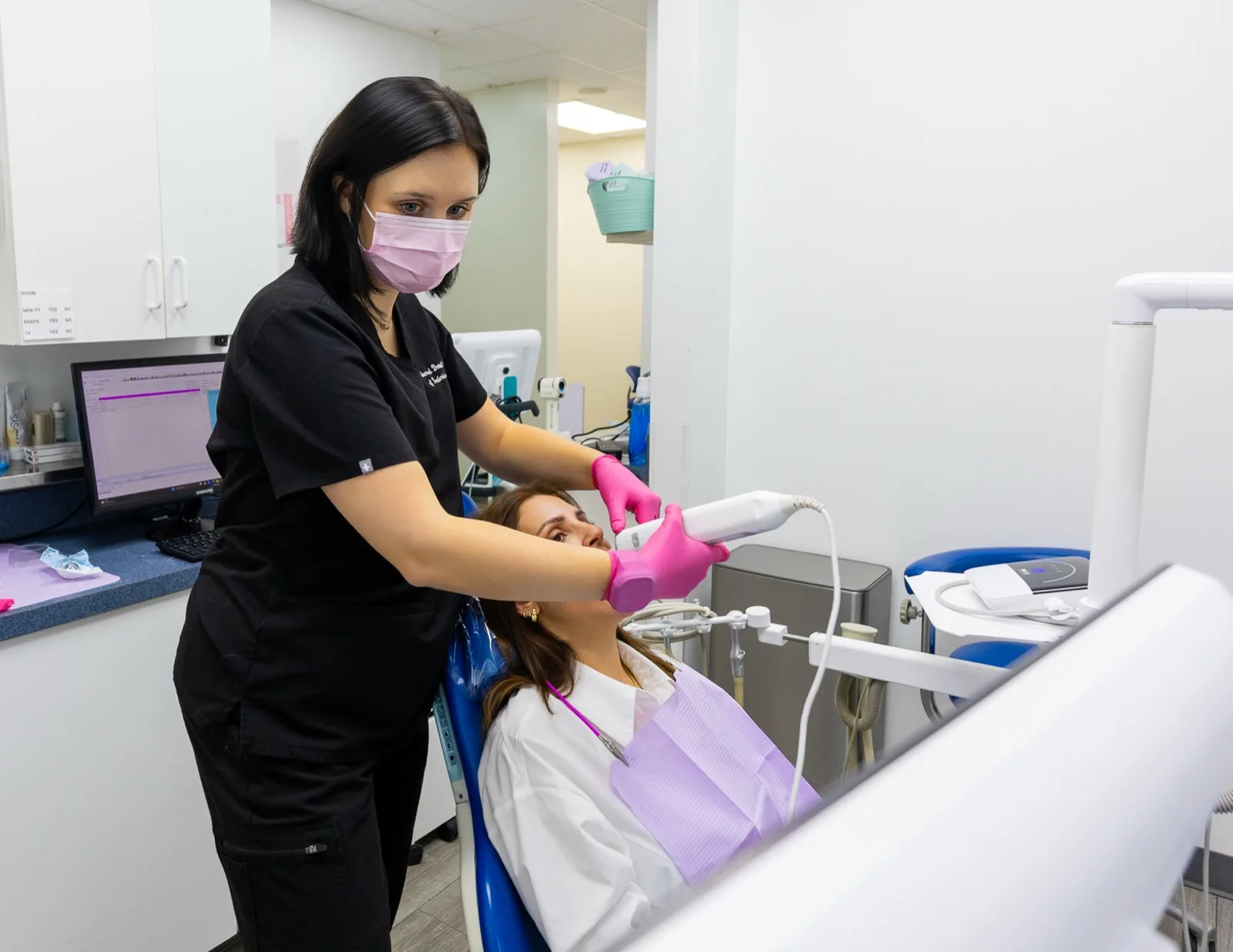
You take the trays out to eat, brush, and floss, and for the photos that matter. Dr. Waris will map out how many trays your case needs and roughly how long treatment runs, based on your specific bite and spacing.
Treatment length varies by case; we’ll give you a real estimate at your consult, not a generic timeline.
Invisalign works well for a lot of mild-to-moderate crowding, spacing, and bite concerns, but not every case is a fit for clear trays alone, and we’ll tell you honestly if traditional treatment would serve you better.
From Scan to Retainer
Consult & iTero scan
A precise 3D image of your teeth: your aligners are built off an exact model of your mouth, not a guess. You’ll see a preview of how your teeth are expected to move before treatment begins.
Your tray series
Each tray is worn roughly 20–22 hours a day and swapped for the next every one to two weeks.
Quick check-ins
Short visits to make sure movement is tracking to the plan.
Retainer
Vivera retainers or a traditional retainer made right here, holding your new alignment once active treatment ends.
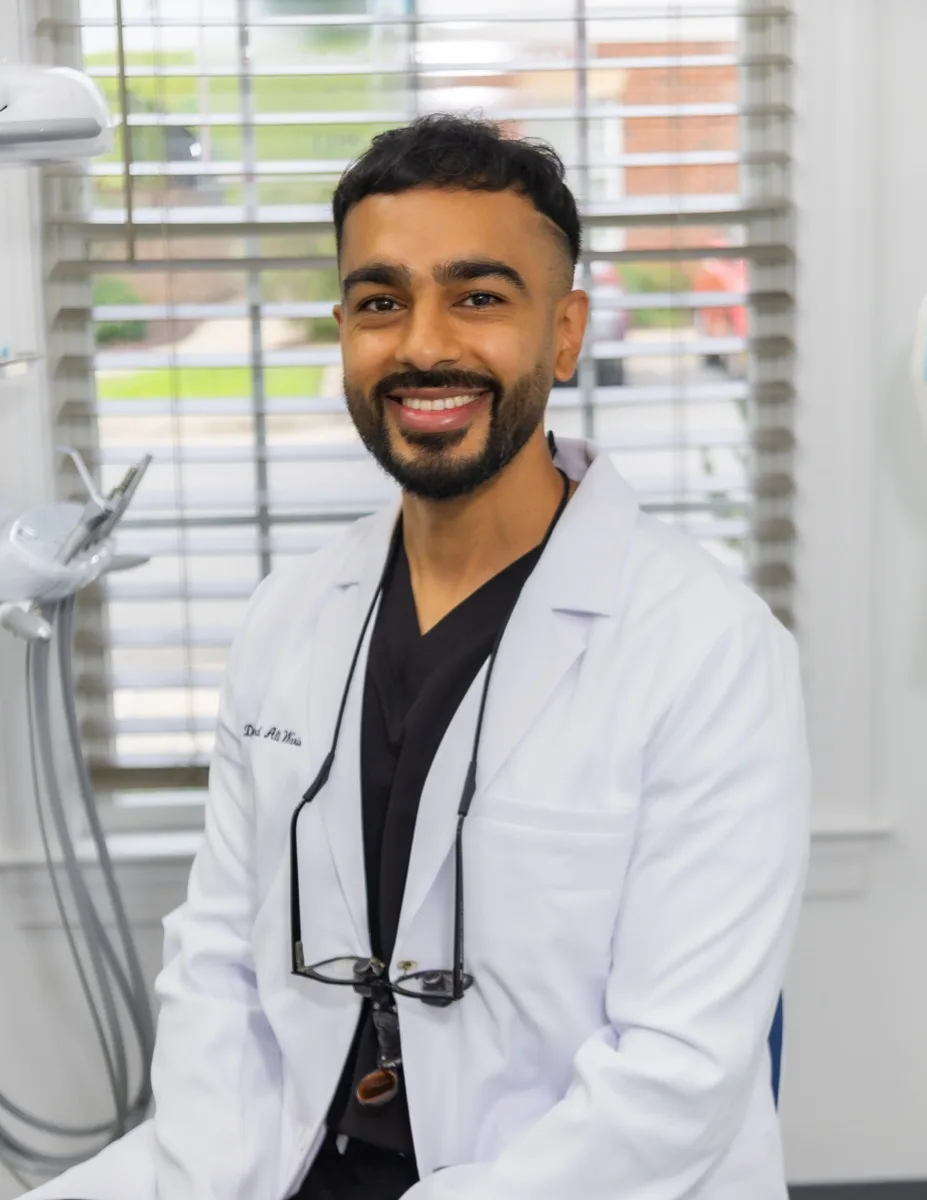
Dr. Mohammed Ali Waris, DDS
Dr. Waris earned his dental degree from Virginia Commonwealth University in 2020 and has treated patients in Fredericksburg ever since. He’s a member of the American Dental Association, trained in Invisalign, and regularly teaches and mentors other dentists. Ask him a question and he’ll answer it plainly, before he ever tells you what he’d recommend.
I had an appointment for my Invisalign, and Merry placed my attachments very carefully and smoothly. She explained everything to me clearly and made sure I felt comfortable throughout the process.
A Real Number at Your Consult
Invisalign cost depends on how much movement your case needs (mild spacing costs less to correct than a full arch of crowding) so we don’t publish a flat price. We’ll give you a real number after we’ve reviewed your scan, not before.
Dental insurance sometimes puts an orthodontic benefit toward clear aligners, and we’ll check your specific plan before you start. Invisalign typically isn't a Medicaid-covered service, but for whatever insurance doesn't cover, we offer financing plus in-house payment plans — so cost doesn't have to be the reason you wait to ask.
Invisalign Questions
Yes: a large share of our Invisalign patients are adults who didn’t want visible braces. Clear trays fit into a working schedule without changing how your smile looks day to day.
It depends on how much movement your case needs. We’ll give you a realistic range at your consult after reviewing your scans, not before.
Typically, yes: a retainer holds your new alignment in place after active treatment ends. We’ll cover exactly what that looks like for your case.
It depends on how much movement your case needs. We give you a real number at your consultation (before treatment begins) and we offer financing through CareCredit, Cherry, Sunbit, and LendingPoint, plus in-house payment plans.
Some plans put an orthodontic benefit toward clear aligners, and we’ll check your specific plan before you start. Invisalign typically isn’t a Medicaid-covered service: for whatever insurance doesn’t cover, we offer financing plus in-house payment plans.
Most patients feel some pressure for the first day or two with each new tray, similar to a dull ache, and it eases as you adjust. Many describe it as more comfortable than they expected. If something feels off, call us.
Some bite and spacing issues still need traditional orthodontics. We’ll tell you honestly at your consult if that’s the better path for your case, and point you toward the option that will actually get you there.