Your Teeth, Refined
A veneer is a thin, custom-made shell bonded to the front of a tooth to change its color, shape, length, or the small gaps and chips that bother you. Think of it less as a new tooth and more as your tooth, refined.
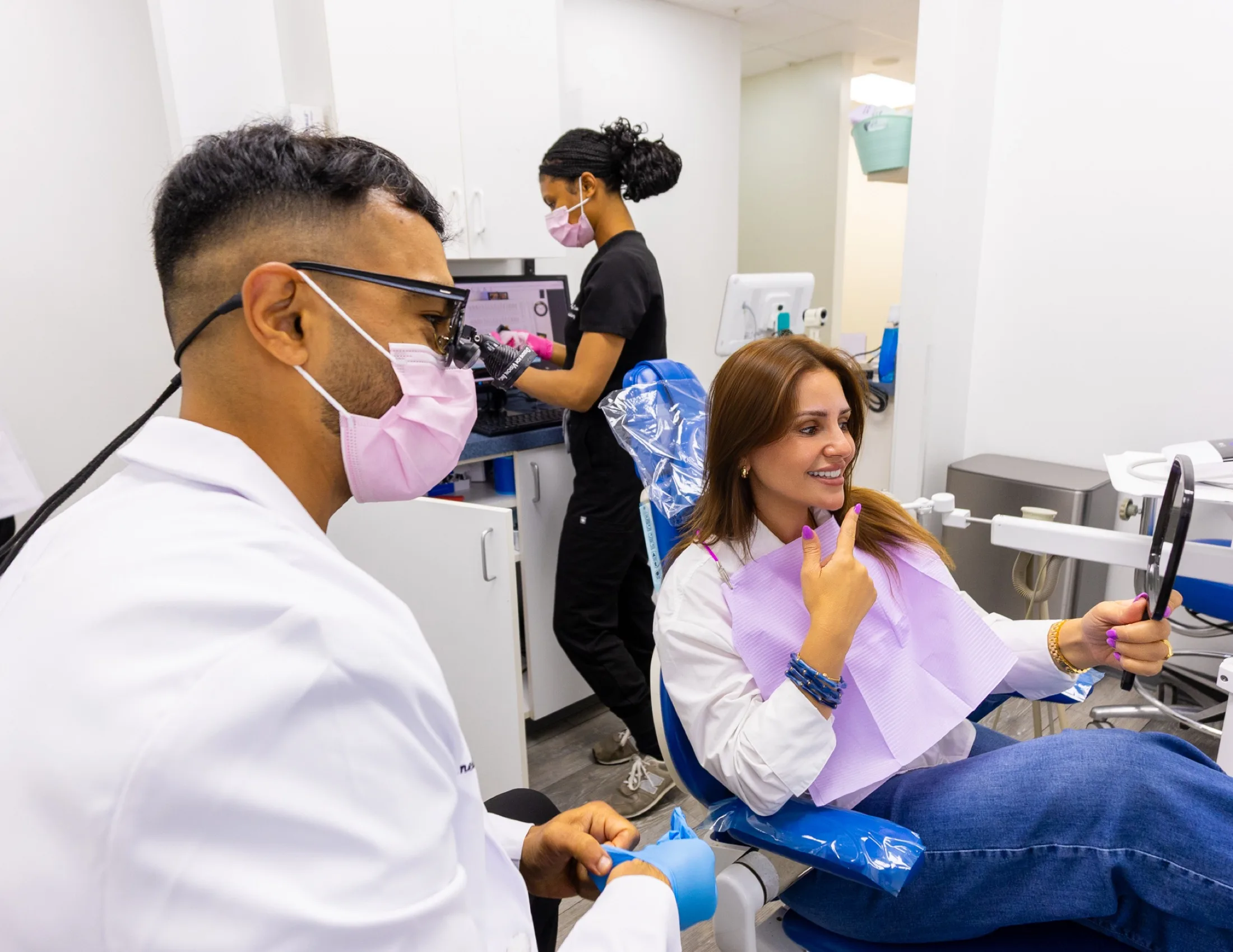
Porcelain or Composite: We’ll Tell You Honestly
Composite veneers are built from tooth-colored resin, usually placed in a single visit, and cost less up front. They’re softer, pick up stains faster, and don’t hold up as long.
Porcelain veneers take more time to make but are far more stain-resistant and durable, which is why most patients choosing veneers for a lasting result go porcelain. We’ll walk you through both and tell you honestly which one fits your goals and your budget.
The Right Tool for the Right Smile
Veneers are a good fit if you’re bothered by teeth that are…
Patients who grind their teeth heavily at night, or who have active decay or gum disease, usually need that addressed first: we’ll catch it at your exam and build a plan around it rather than covering it up.
If your main concern is crowding or bite alignment, Invisalign may get you a better result on its own or as a first step before veneers finish the job. We’ll say so plainly if that’s the case.
From Conversation to Placement
Consultation
We talk through what you want to change, and take photos and impressions to plan shape and shade together.
A preview of the plan
Before any tooth is touched, we talk through what the finished shape and color will look like.
Preparation
A thin layer of enamel is gently removed. This can’t be undone: exactly why we take planning seriously. You wear temporaries while the lab works.
Placement
We check fit, shape, and shade against your natural teeth, then bond your veneers into place.
Settling in
A few days of your tongue and bite getting used to the new surface, then it feels completely natural.

What You’d Change: Not What We Can Sell You
A veneer case starts with what you’d change, not with what we can sell you. We’ll tell you when composite or whitening gets you most of the way there for less, and we’ll tell you when Invisalign should come first.
Every plan is built and reviewed by Dr. Waris and Dr. Arafa together before we touch a single tooth. If you’re nervous about the preparation step, we go at your pace: gentle numbing and a calm, unhurried chair are standard here, not an upgrade.
My first visit was awesome. From the receptionist to the dentist, the whole staff was friendly and helpful. I could not be more pleased!
Priced After Your Consultation, Honestly
Every veneer case is priced differently: how many teeth, composite versus porcelain, and how much planning and lab work your smile needs. We don’t publish a flat number because a flat number wouldn’t be honest.
Veneers are typically a cosmetic investment rather than something insurance or Medicaid covers, though restorative work bundled into your plan may be covered in part.
Veneer Questions
Not when they’re done right. Porcelain veneers are shaped and shaded to match your own teeth and your facial features: the goal is a refined version of your smile, not a generic, uniform white.
With good brushing, flossing, and regular checkups, porcelain veneers typically last 10 to 15 years. Composite wears faster and stains more easily, part of why we talk through both options honestly at your consult.
The enamel-preparation step is done under local numbing, and most patients describe it as comfortable. Some mild sensitivity in the first few days is normal as your bite adjusts.
Yes. A veneer covers the front of the tooth, but the rest is still natural enamel, so brushing, flossing, and checkups matter just as much as before.
Yes. Composite is faster and less expensive up front, often placed in one visit; porcelain holds its color and shape far longer. We’ll help you weigh which fits your goals.